
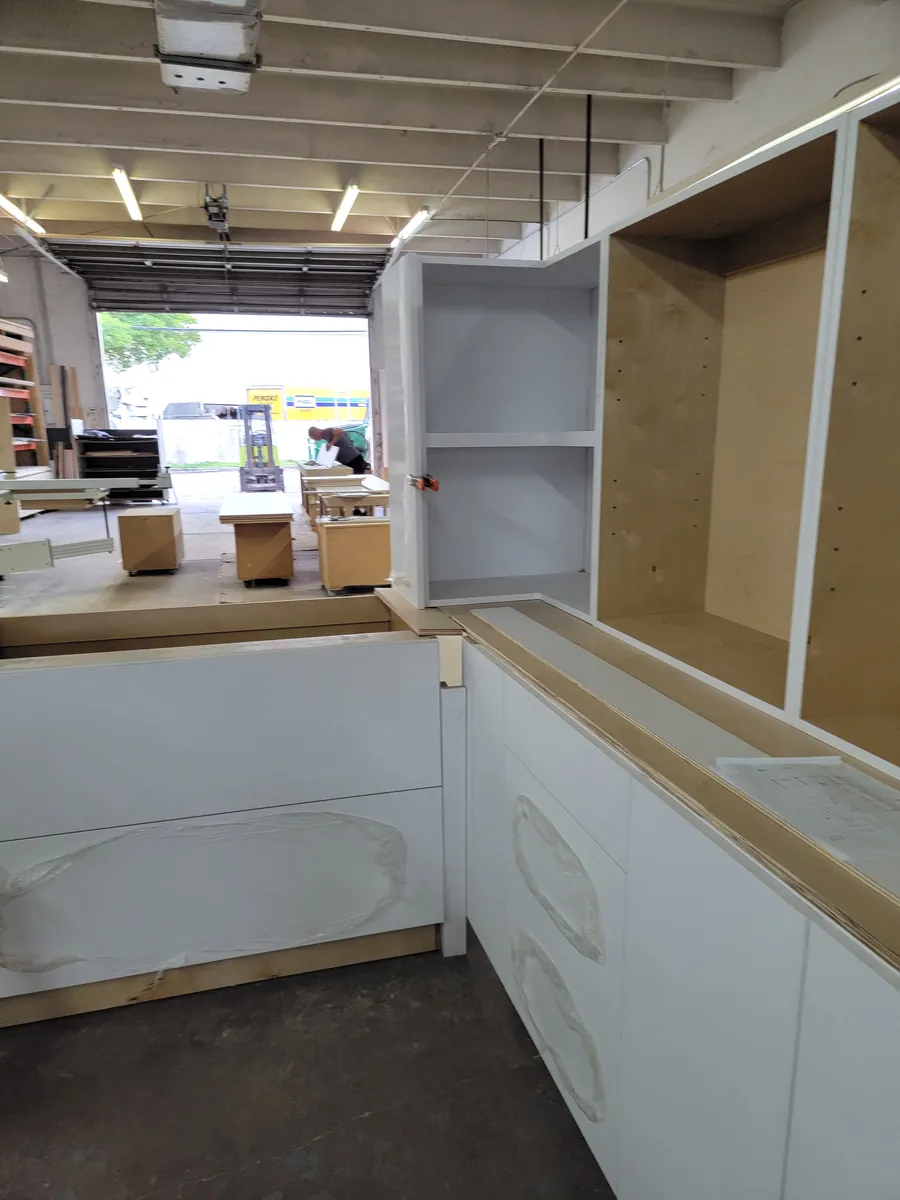
Guests notice the bar and the dining room, but restaurant storage cabinets do much of the work that keeps service running. Server stations, host stands, back-of-house storage and dry storage all need to be planned around how staff actually move during a busy shift. We gave an overview of restaurant millwork in our restaurant, bar and coffee shop millwork post. This guide goes deeper into planning and building the storage side.
Start with an inventory, not a drawing
The best restaurant storage layouts start with a list of what has to be stored, where it's used and how often. Before drawings begin, walk through a shift and note:
- What each station holds: menus, silverware, napkins, glassware, condiments, to-go supplies, POS equipment
- What needs to be locked: liquor, cash, wine, paperwork
- What gets restocked, how often and from where
- What needs power, data or refrigeration
That list drives cabinet sizes, drawer counts and shelf spacing. It also keeps the design team from building beautiful cabinets that don't hold what the staff needs.
Server stations
Server stations are the busiest storage pieces in the front of house. A good station puts the most-used items within easy reach and keeps clutter out of guests' sight.
Planning points:
- POS placement. Screens, printers and card readers need power, data and ventilation. Cable routes should be planned in the casework.
- Drawer layout. Shallow drawers for silverware and small items; deeper drawers or bins for linens and to-go supplies.
- Work surface. A durable top with room for staging plates and drinks.
- Water and ice. If the station includes a sink or ice, plumbing and moisture protection have to be planned from the start.
- Trash and recycling. Pull-out bins keep the station clean and quick to empty.
Host stands
A host stand is a piece of furniture guests see first, so it has to match the dining room design. It also has to work as a small office.
Planning points:
- Menu storage sized to the actual menu dimensions
- Tablet or POS mounting with power and data routed through the stand
- Lockable storage for gift cards, reservations books or valuables
- Task lighting for reading screens and menus in a dim room
- Stability. Ask how a freestanding stand will be stabilized, for example with a wide base or a floor anchor.
Back-of-house storage
Back of house covers storage outside the kitchen line: offices, staff areas, liquor rooms, linen storage and supply areas. Durability and easy cleaning matter more here than display.
Where wood-based cabinetry fits. Kitchen prep and cooking areas often call for stainless steel or other specified materials. Where wood-based cabinetry is allowed, and where other materials are required, is set by the design team and the local health department. We build to the approved spec.
Common BOH pieces:
- Liquor and wine storage with locks
- Office cabinetry and file storage
- Staff lockers and cubbies
- Linen and paper goods storage
- Shelving for smallwares and to-go supplies
Dry storage
Dry storage needs to hold heavy, bulky goods and stay easy to clean. Planning points include:
- Adjustable shelving so layouts can change as suppliers and menus change
- Shelf depth and span sized for the actual loads, such as cases, bags and bulk containers
- Raised bases or open space below to make floor cleaning easier
- Durable interiors, such as high-pressure laminate, that stand up to scuffs and wiping
Whether dry storage uses millwork, wire shelving or another system is up to the design team and any applicable health requirements.
Materials and hardware for restaurant storage
Restaurant cabinets open and close far more often than home cabinets. For our custom work we use PureBond plywood and Blum hardware. Other strategies include:
- Durable laminate interiors that wipe clean
- Sealed edges near sinks, ice and dish areas
- Heavy-duty drawer slides for silverware and supply drawers
- Locks where cash, liquor or valuables are stored
Where a project specifies other materials, we build to the approved spec.
How a restaurant storage project runs
- Review. We review the designer's drawings and your storage inventory.
- Shop drawings. We produce shop drawings showing sizes, drawer layouts, equipment cutouts and power or plumbing locations. The design team approves them.
- Fabrication. Lead time is 8-12 weeks after drawings are approved.
- Installation. Our own crew installs, coordinating with the general contractor and other trades.
For restaurant millwork in South Florida, we serve Broward, Miami-Dade and Palm Beach counties; see our service areas. See our commercial cabinetry page, our mill and our page for designers and builders. For the bar itself, see our custom restaurant bar guide. We're rated 4.8 on Google from 87 reviews. Call 954-939-8579 or visit our showroom at 2416 S Andrews Ave, Fort Lauderdale, FL 33316, Monday through Friday, 9 to 5.