
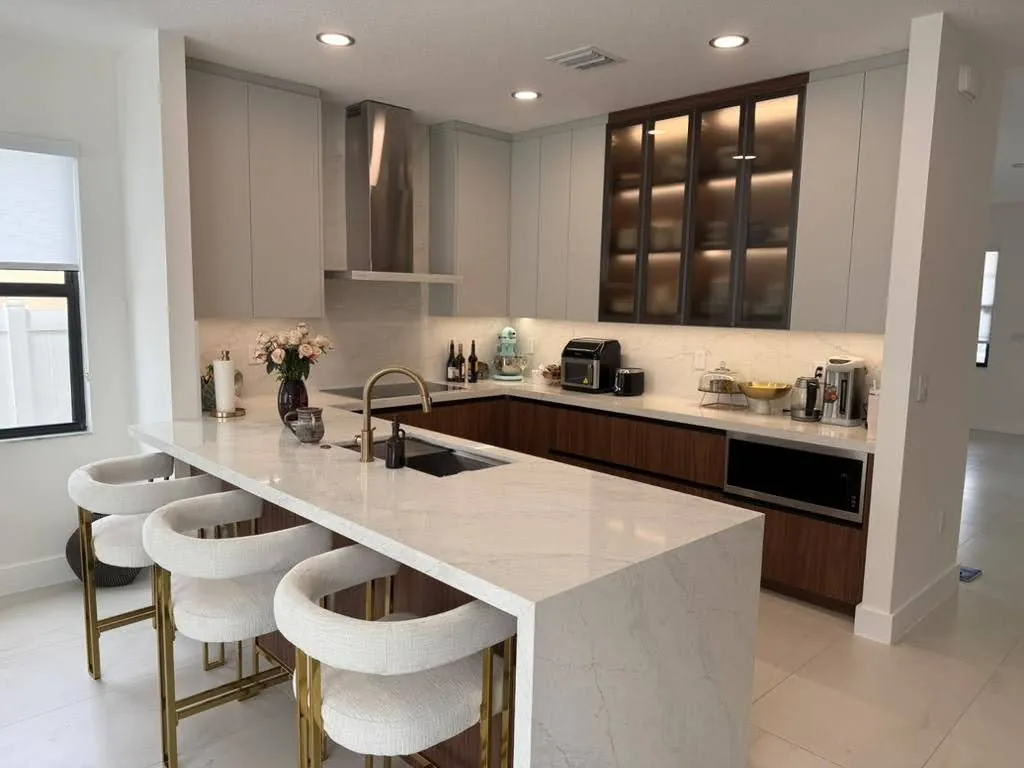
Ask people what they want from a new kitchen and "more pantry" is near the top of the list. But a pantry isn't just a big cabinet. The best pantries are planned around what you buy, how you cook and who reaches for what, so food is easy to see and nothing gets lost at the back of a deep shelf.
What kind of pantry fits your kitchen?
Tall pantry cabinets
A floor-to-ceiling cabinet, usually next to the refrigerator or at the end of a run. Inside, it can have adjustable shelves, roll-out trays or a full-height pull-out. Two tall units side by side make a pantry wall, which is often the best use of space in a condo kitchen.
Drawer pantries
Deep drawers in base cabinets or an island hold cans, jars, snacks and bulk items, and you see everything from above. They're easy for kids and for anyone who doesn't want to bend into a low cabinet.
Reach-in pantry closets
A shallow closet with doors, fitted with shelves at different depths. Shallow shelves keep things in one row, so nothing hides behind something else.
Walk-in pantries
A small room off the kitchen with shelves, drawers and sometimes a counter. Planning it is like planning a walk-in closet: decide what goes on each wall and leave room to move.
Butler's pantries and coffee stations
A run of cabinets between the kitchen and dining room, or a dedicated station for coffee, a second dishwasher, glassware or a wine fridge. Built-in coffee machines need exact openings and ventilation, so choose the machine before the cabinets are drawn.
How deep should pantry shelves be?
Shallower than most people expect. Deep shelves look generous but turn into a dark cave where food expires. Common practice:
- Shallow shelves for cans, jars and spices, so each item is in one row.
- Deeper shelves or drawers for small appliances, bulk packs and serving pieces.
- Roll-out trays or drawers inside tall cabinets, so the back of the shelf comes to you.
- Adjustable shelf heights, because what you store will change.
Pull-outs, drawers or shelves?
Each one has its place:
- Full-height pull-outs show everything at once from both sides. They suit narrow spaces next to a refrigerator or range. They need strong hardware, since they carry a lot of weight on one runner system.
- Drawers are the most accessible storage for heavy and everyday items. Blum runners carry the weight smoothly and close softly; see our Blum guide.
- Fixed or adjustable shelves cost the least and suit items you can see at eye level.
A good pantry usually mixes all three: drawers low, pull-out trays in the middle, shelves at eye level and above.
Where should the pantry go?
Close to where you prep and to the refrigerator, so unloading groceries and cooking don't mean crossing the room. In an open-plan South Florida kitchen that faces the living room, a pantry wall with flush doors can look like a clean panel of cabinetry, with the mess hidden behind it. A panel-ready refrigerator next to it makes the whole wall read as one piece.
Hide the small appliances
Toasters, blenders, air fryers and stand mixers take over counters. Options include:
- An appliance garage on the counter, with a lift-up or pocket door and outlets inside.
- A tall cabinet with an outlet and a pull-out shelf at counter height.
- A deep drawer for heavy appliances you use less often.
Plan outlets and any lighting with the electrician before the cabinets go in.
Pantries and South Florida humidity
Food, paper goods and pet food all suffer in humid air. Keep the pantry inside the air-conditioned space, avoid building it against an exterior wall without good airflow if you can, and choose box materials that hold up. We build pantry cabinets from Columbia Forest plywood in our Fort Lauderdale mill. In seasonal homes, empty perishables before you leave and keep the AC running. More in our humidity guide.
Pantry storage beyond food
Many pantries end up holding more than groceries: paper goods, cleaning supplies, pet food, a step stool, reusable bags, the vacuum or a recycling sorter. Give those a planned place, low and near the door for heavy items and bins, so they don't crowd the food shelves. A tall broom cabinet next to the pantry, or a pull-out recycling drawer in a base cabinet, keeps the pantry for what it's meant for.
Lighting inside the pantry
A tall cabinet or walk-in pantry is much easier to use when you can see inside it. LED strips on the face frame or under shelves, switched by the door, are planned into the drawings before the cabinet is built.
Doors that match the kitchen
Pantry cabinets usually use the same doors and finish as the rest of the kitchen, so the pantry blends in. In a two-tone kitchen, the pantry wall often takes the darker or wood finish, with the refrigerator panel to match, while the perimeter stays lighter. Tall pantry doors need good hinges and sometimes a third or fourth hinge to stay straight; every job we build uses Blum. Pocket doors that slide back into the cabinet are a good option for a coffee station or appliance cabinet you open all day.
Pantry planning checklist
- List what you store: cans, jars, dry goods, snacks, bulk packs, small appliances, serving pieces, pet food, cleaning supplies.
- Decide who uses it, and put kids' and everyday items at easy heights.
- Choose the type: tall cabinets, drawers, reach-in, walk-in or a mix.
- Pick the appliances that go in or near it, with specification sheets.
- Plan outlets and lighting.
- Visit the showroom to see pull-outs and drawers in person.
Pantries are part of every kitchen we draw. Come see them at 2416 S Andrews Ave, Fort Lauderdale, FL 33316, look through our custom kitchen cabinets and projects, or call 954-939-8579. If you're planning a kosher kitchen, see our kosher kitchen guide. We work across Fort Lauderdale, Weston, Coral Springs and the rest of South Florida.