
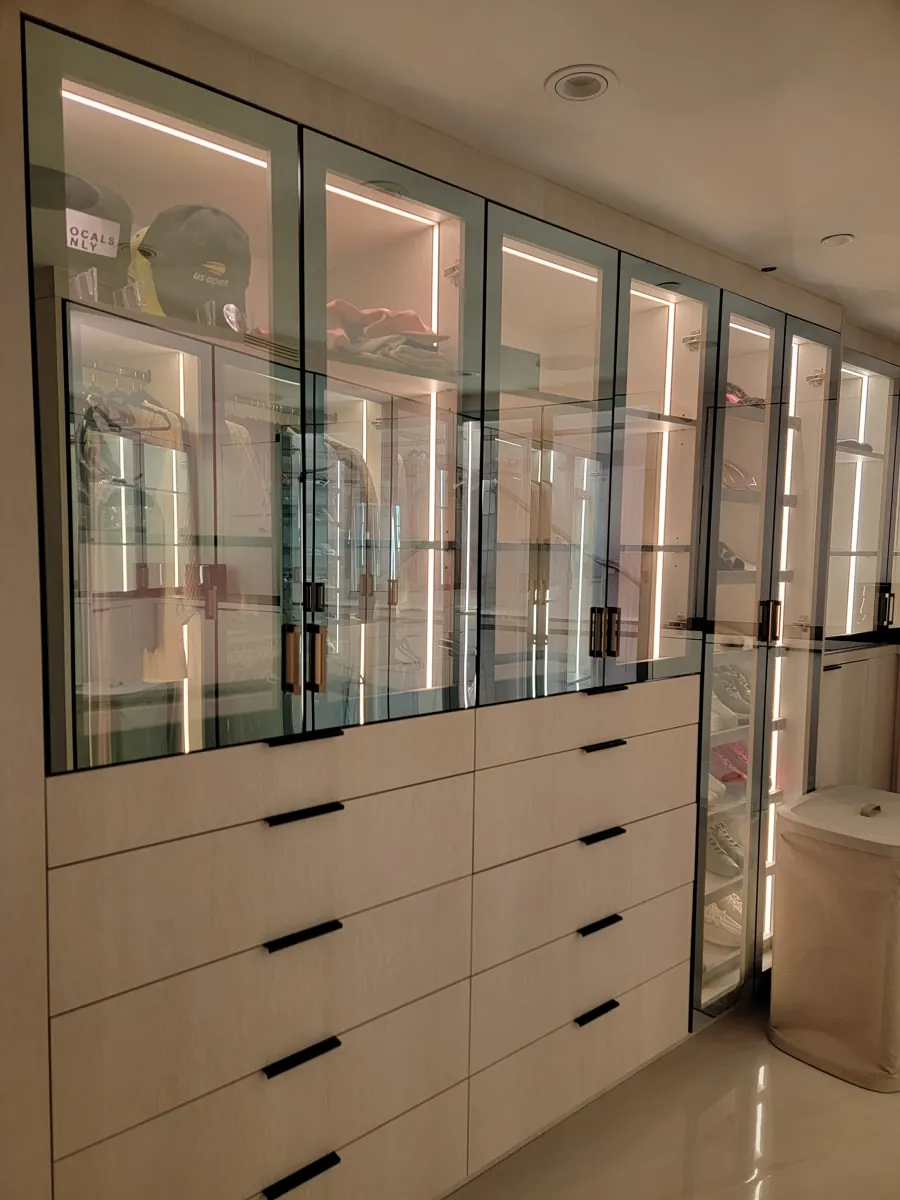
A glass-front wardrobe turns a closet into something closer to a boutique: everything on display, lit, and protected from dust. It takes more planning than a closet with solid doors, because everything behind the glass is on show.
Decide what goes behind glass
Glass works best for things you want to see and that look good folded or hung neatly: jackets, dresses, handbags, shoes and hats. It works less well for everyday basics and anything you'd rather not look at. Most walk-ins mix the two: glass doors on the display sections, solid doors or drawers for the rest.
- Hanging behind glass: keep hanging sections even in length, so the line of hems looks tidy through the doors.
- Bags and shoes: shelves sized to the items, with enough space between them that each one reads on its own.
- Drawers below: a bank of solid drawers under the glass holds folded clothes, underwear and accessories out of sight.
Doors, frames and glass
The walk-in closets in this guide use aluminum-framed glass doors, which keep the frame thin so the glass and the lighting do the work. Ask about the frame finish (black, bronze or a metal tone) so it ties in with the handles and the rest of the room, and about the glass itself: clear glass shows everything, while tinted or textured glass softens the view and hides a little clutter. Door glass should be tempered safety glass; ask about it at the drawing stage.
Hinged doors need room to swing open in the walkway. In a narrow walk-in, that space decides how wide each door can be, so we check it at the measure.
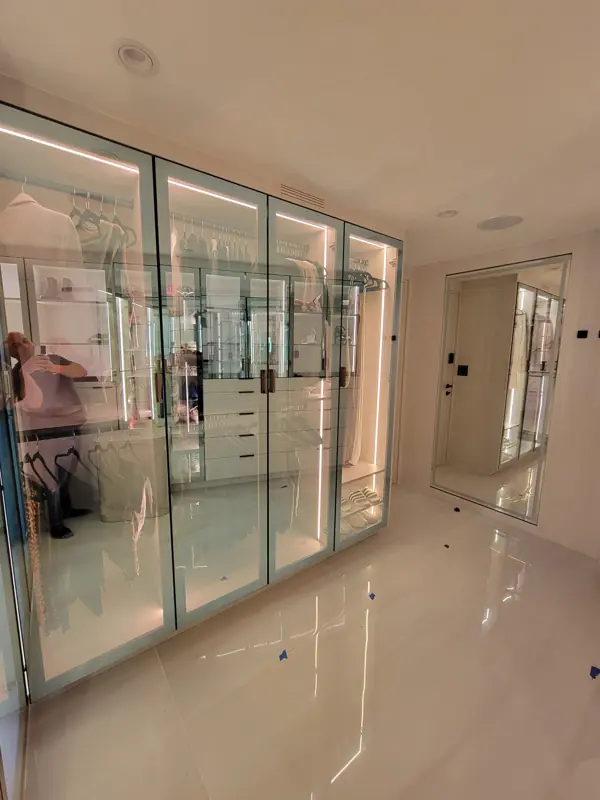
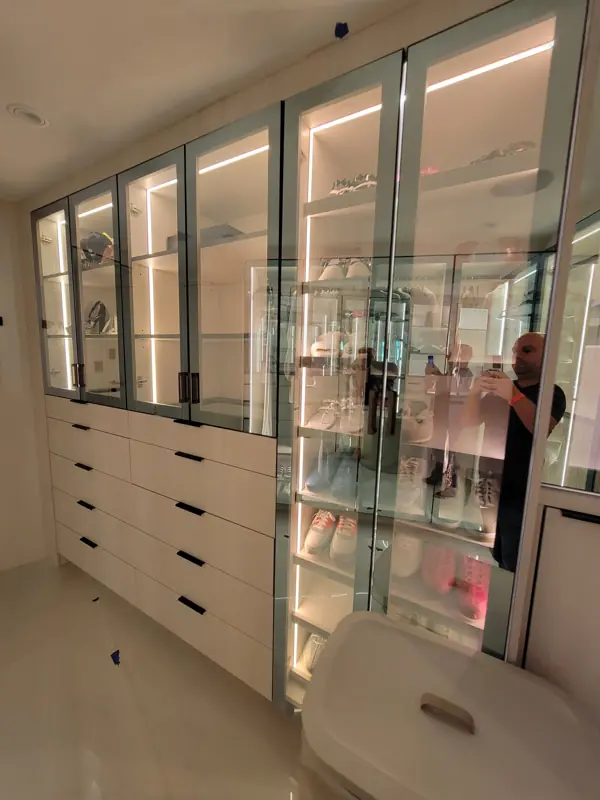
Glass-door wardrobes with LED lighting over soft-close drawers, in a walk-in closet we built. Finished Delta Woodworks job.
Lighting
Lighting is what makes a glass wardrobe. LED strips built into the shelves or the cabinet sides light the clothes from inside, so the closet glows even with the room lights off. A few things to decide early:
- Where the light sits: along the front edge of shelves, down the sides, or both. It has to be planned into the boxes before they're built.
- Color of light: a warm white flatters wood and skin tones; a cooler white reads crisper against white and gray.
- How it switches: on a wall switch, a door sensor or a smart-home system. Your electrician needs to know where the power and drivers go.
Florida humidity
A closed glass wardrobe keeps dust off, but it also keeps air still. In South Florida that matters: keep the AC running, leave some airflow in the closet, and don't seal damp clothes or beach bags behind glass. Plywood boxes hold up better than particleboard in humid air; we build ours from Columbia Forest PureBond plywood. More in the best cabinet materials for South Florida humidity.
Glass wardrobes in condos
Glass doors are heavy and breakable, so in a high-rise they're planned around the service elevator and the building's delivery rules, like the rest of the closet. See our condo guide for the association side.
How we build them
Every glass-front wardrobe we build is drawn to your room and your wardrobe, built in the USA in our Fort Lauderdale shop, and installed by our own crew. Doors and drawers run on Blum hardware. You approve drawings of every wall before anything is cut, and our standard lead time is 4–8 weeks after that. See finished glass closets on our custom closets page, or read the custom closet design guide for the rest of the layout.