
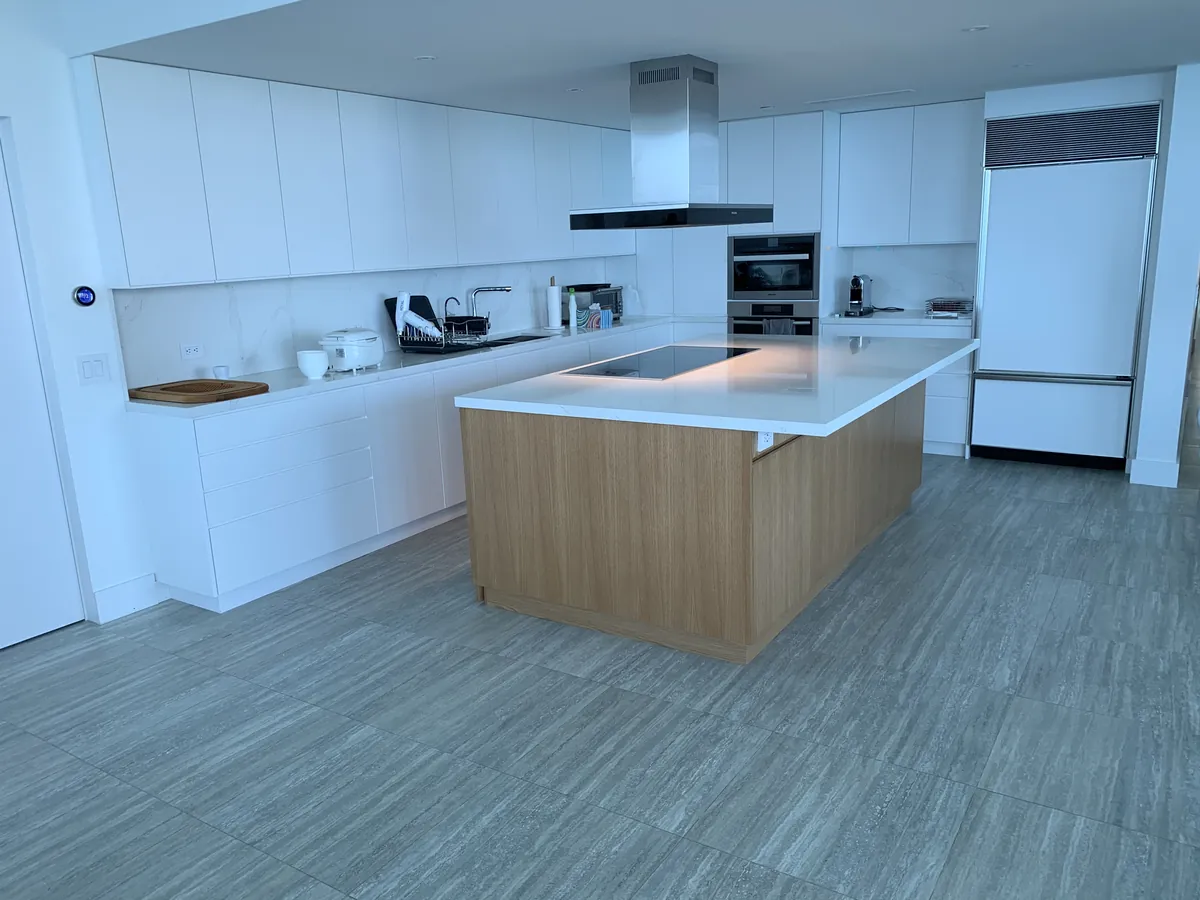
Ask a few cabinet shops about frameless versus face-frame and you'll hear strong opinions. The truth is simpler: they're two ways of building the same box, each with its own look and strengths. Because everything we make is custom, we build either one, and we'll help you pick based on the look you want and how you use the room.
What's the difference?
Face-frame cabinets have a frame of solid-wood rails and stiles glued to the front of the box. The doors hang on that frame. It's the traditional American way to build cabinets, and you'll see a strip of frame between doors and around the openings, unless the doors are made to cover it.
Frameless cabinets, often called European or full-access, have no front frame. The box sides are the structure, the doors hang directly on the box sides, and the doors usually cover the whole front, with only a slim, even gap between them.
How they look
- Frameless reads clean and modern: continuous door faces, tight even gaps, and it's the natural choice for handleless, slab and high-gloss kitchens.
- Face-frame suits traditional and transitional kitchens: inset doors, beaded frames and shaker doors with visible frames all start here.
- In between: face-frame cabinets with full-overlay doors look close to frameless from across the room, and frameless boxes can carry shaker doors. The door style matters as much as the box.
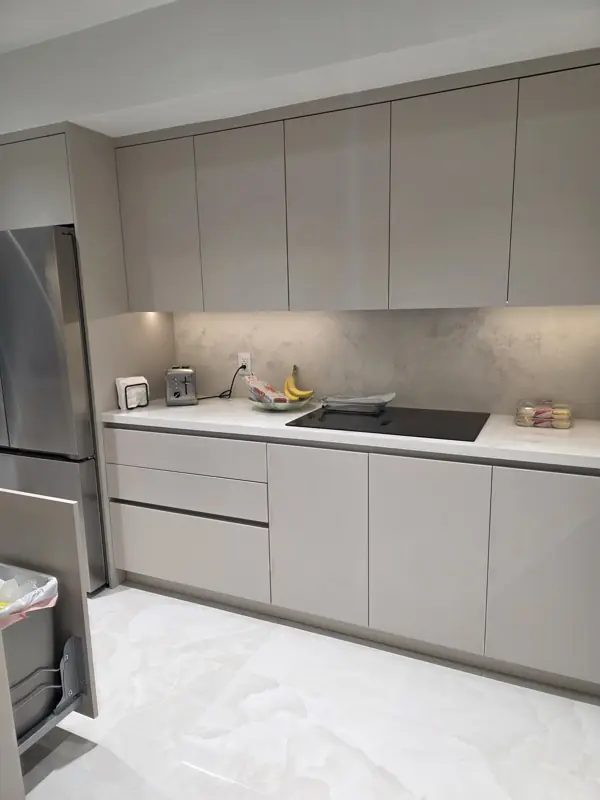
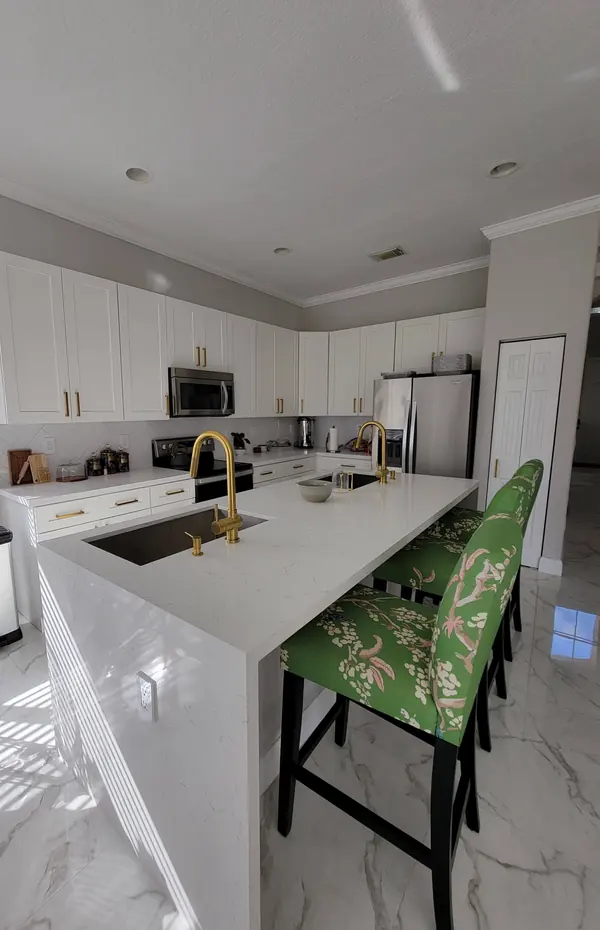
Two kitchens we built: light gray handleless cabinets, and a white shaker kitchen. Finished Delta Woodworks jobs.
Storage and access
Without a frame in the way, frameless cabinets give slightly wider openings and drawers, and nothing to reach around when you pull out a pot. In a big kitchen the difference is small; in a condo kitchen where every inch counts, it can add up. Face-frame cabinets lose a little width to the frame, but the frame stiffens the front of wide boxes and gives inset doors something to close into.
Strength and installation
Both are strong when they're built well. Frameless cabinets rely on the box itself, so the box material and the joinery matter; ours are Columbia Forest PureBond plywood. Face frames add rigidity at the front and can be scribed to wavy walls, which helps in older homes. Frameless cabinets need flat, plumb installation, because the tight gaps show every error, which is one reason we measure and install everything ourselves.
Hardware
Both styles take concealed hinges and full-extension, soft-close drawers. We fit Blum hardware on every door and drawer, whichever way the box is built. Inset doors on a face frame use their own hinge types, so decide early. More on that in Blum hinges and slides, explained.
Which is right for a South Florida home?
- Modern condo or new build: usually frameless, for the clean lines and the extra inches.
- Traditional, coastal or transitional: face-frame, especially with inset or beaded doors.
- Matching existing cabinets: match what's there, so new and old read as one kitchen.
- Closets, vanities and built-ins: the same rules apply; most modern closets and floating vanities are frameless.
Humidity affects both the same way: plywood boxes, sealed edges and an air-conditioned house matter more than the frame. See the best cabinet materials for South Florida humidity.
We build both
Every job we build is drawn to your room and built in the USA in our Fort Lauderdale shop, so frameless or face-frame is your call, not ours. Bring photos of what you like to the showroom at 2416 S Andrews Ave and we'll show you how each is built. See also custom vs semi-custom vs stock cabinets.