
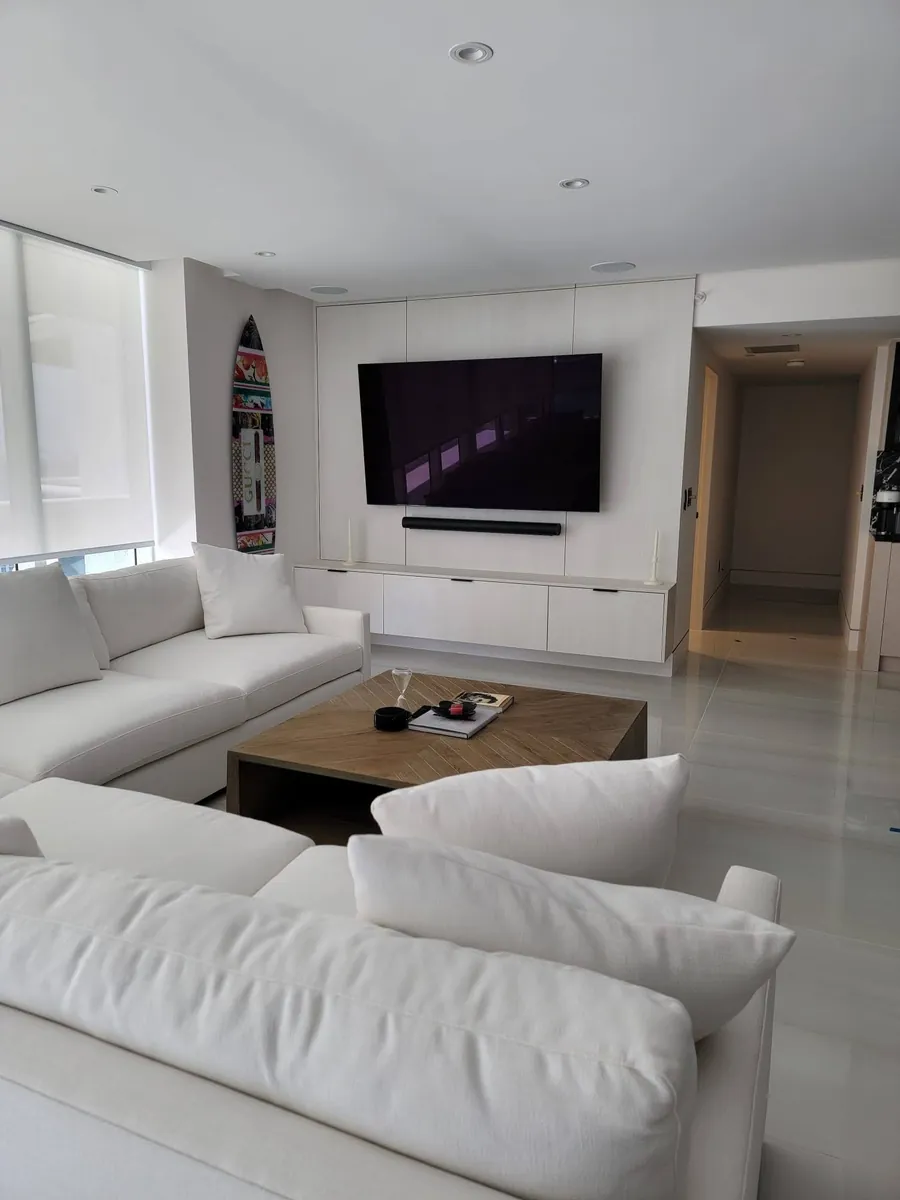
In most living rooms, everything faces one wall. A custom wall unit turns that wall into the room's centerpiece: it frames the TV, hides the wires and the electronics, and gives you storage and display space that freestanding furniture never quite manages.
Start with what the wall has to do
- Watch TV. How big is the TV now, and how big might the next one be?
- Hide electronics. Cable box, streaming devices, game consoles, speakers, a soundbar or receiver.
- Store things. Games, remotes, blankets, books, kids' toys.
- Display things. Books, art, collections, family photos.
- Something else: a fireplace, a bar, a desk.
The answers shape the layout. A wall built mainly for movies looks different from a library wall with a TV in it.
The TV
Plan the TV opening for a larger screen than you have now, or design the panel behind it so a future TV still looks right. Center the TV at a comfortable viewing height from where you sit; many people mount TVs too high. Decide whether it's flat on the wall, recessed into a niche, or on an articulating mount.
Cables and electronics
Hiding cables is the main thing a wall unit does better than furniture. Plan:
- a cable chase from the TV down to the equipment cabinet;
- outlets behind the TV and inside the cabinets;
- ventilation for equipment, since electronics in a closed cabinet need airflow;
- doors that let a remote signal through (or a repeater), or open shelves for devices that need line of sight.
Coordinate with your electrician or AV installer before the wall unit is built.
Storage and display
A common layout is closed cabinets or drawers low, where things are heavy and cluttered, and open or glass shelves higher, for display. Floating base cabinets, like our floating media wall and white floating TV wall, keep the room feeling light. Drawers on Blum soft-close runners are easier to use than deep base doors.
Fireplaces and bars
An electric fireplace below or beside the TV is popular in South Florida, where it's more about the look than the heat. Follow the fireplace maker's clearance and ventilation requirements. A bar section with a wine fridge, glass storage and a stone top turns the wall into an entertaining space. See our black fireplace and bar wall.
Lighting
LED strips behind the TV panel, in display shelves and under floating cabinets give the wall depth and make it a feature at night. Plan the lighting and its switches with the drawings.
Materials and finishes
Wall units carry books, TVs and equipment, so they need solid construction. We build ours from Columbia Forest PureBond plywood in our Fort Lauderdale mill, with Blum hardware. Finish options range from matte white to warm wood to high-gloss lacquer; read paint vs stain vs lacquer.
In condos
In a condo, a wall unit can replace a TV stand, a bookcase and a sideboard, freeing up floor space. Building rules on installation still apply; see our condo guide.
Planning checklist
- Measure the wall, including windows, doors and outlets.
- Decide the TV size, height and mount.
- List all equipment and what needs to be hidden.
- Decide on storage versus display.
- Decide on any fireplace, bar or desk.
- Plan lighting and power.
See finished wall units at our Fort Lauderdale showroom, and on our built-ins and wall units page.