
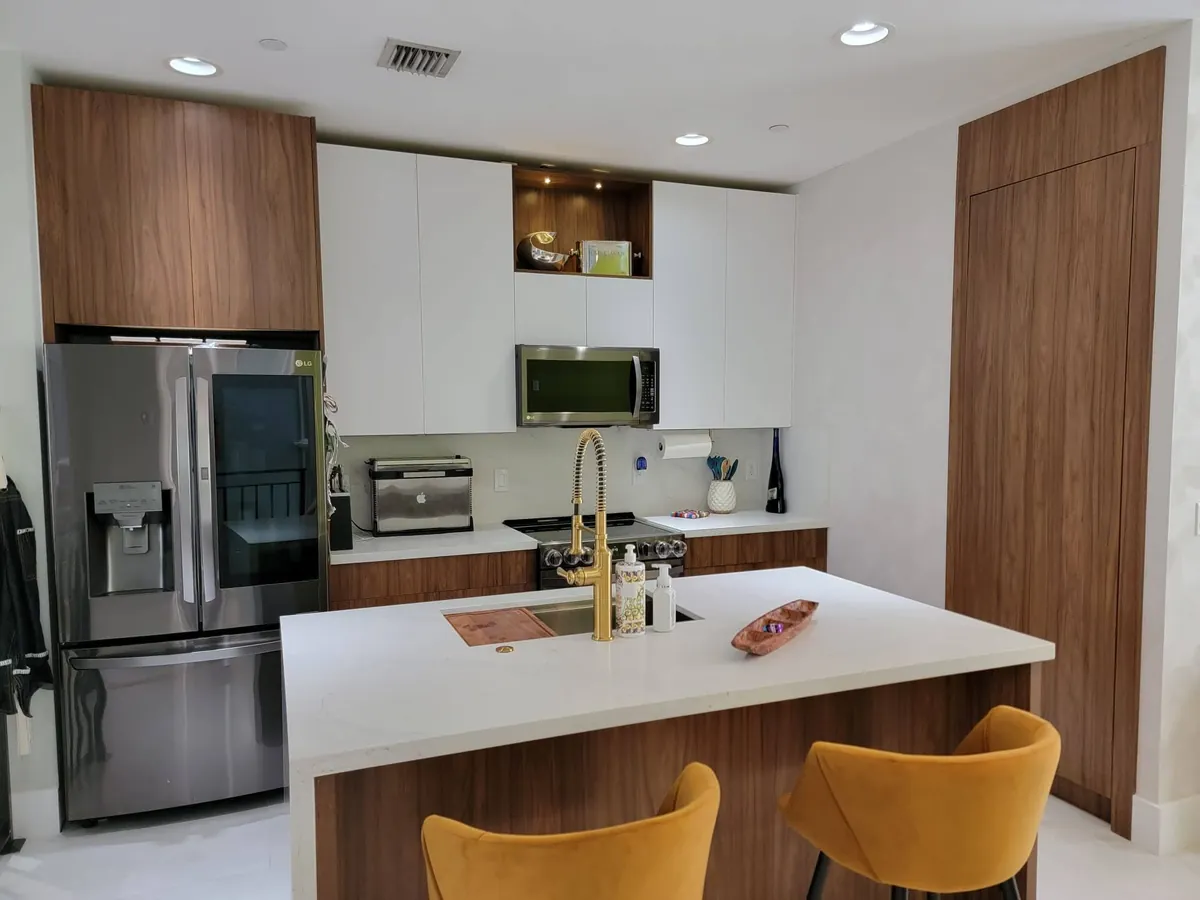
The finish is what you see and touch every day, and it decides how a kitchen ages. People usually ask "paint or stain?", but the real choice has two parts: what color goes on the wood (paint, stain or neither), and what protective coat goes over it.
First, the terms
- Paint is opaque. It hides the wood completely and gives a solid color.
- Stain colors the wood but lets the grain show through.
- Clear finish means no color is added; the natural wood is simply protected.
- Lacquer and similar spray finishes are the protective topcoat. They can be clear (over stain or natural wood) or pigmented (which is how most factory-smooth painted cabinets are done). They come in different sheens, from matte to high gloss.
So "paint vs stain vs lacquer" is really "solid color vs visible grain", plus a decision about the topcoat and sheen.
Painted cabinets
Painted cabinets give a clean, solid color: white, cream, greige, navy, green, black. They suit modern and transitional kitchens and they're the usual choice for shaker doors in white.
Good to know:
- A smooth, sprayed finish looks very different from a brushed one. Ask how the finish is applied.
- Paint shows dings and chips more than stain, because a chip reveals a different color underneath. Touch-ups are possible but are never perfectly invisible.
- On solid wood doors, seasonal movement can open a fine line at the joints of a painted frame. This is normal wood behavior and shows more under paint. Door material and construction matter here; ask what yours will be made of.
- White and light colors show grease near the cooktop more; darker colors show dust and fingerprints more.
Stained and natural wood cabinets
Stained or clear-finished wood shows the grain: oak, walnut and other species each have their own character. Our walnut and white kitchen and light oak kitchen are good examples.
Good to know:
- Grain hides small scratches and wear much better than a solid color.
- Wood color changes with light. Sun through South Florida windows will mellow or darken some species over time. Expect it and plan for it.
- Stain looks different on different species and even on different boards. Always approve a sample on the actual wood, not a photo.
Sheen: matte, satin or gloss
Sheen changes the look as much as color does.
- Matte looks calm and modern and hides small surface imperfections, but some matte finishes show fingerprints.
- Satin is the middle ground most people choose.
- High gloss is dramatic and reflective, and it shows every fingerprint and every flaw in the surface underneath.
Finishes in South Florida
Humidity and sun both affect finishes. A few practical points:
- A well-applied topcoat on every face, including the back of the door and the edges, helps keep moisture out of the wood. Unfinished edges are where trouble starts.
- Strong sun fades and yellows some finishes and woods. Window film or shades help in a sunny kitchen.
- Near the sink and dishwasher, wipe up water quickly regardless of finish.
More in our humidity guide.
Mixing finishes
Two-tone kitchens are popular for good reason: painted perimeter cabinets with a wood island, or white lowers with walnut uppers. A wood accent warms up a white kitchen; a painted island adds color without committing the whole room to it. Look at the projects page for combinations we've built.
Finish and door style go together
The finish and the door profile affect each other. Shaker doors look crisp painted and traditional stained. Slab (flat) doors show off wood grain beautifully and look sleek in high-gloss or matte solid colors. Detailed profiles collect dust in their corners, which shows more on dark paint. And handleless, push-to-open fronts look best in finishes that hide fingerprints, since you'll be touching the face of the door every time.
Touch-ups and repairs
Every finish can be damaged. Ask any shop how repairs work before you choose. Stained wood can often be touched up with a matching marker or wax fill. Painted and lacquered finishes can be touched up too, but large areas or high-gloss faces may need a panel refinished or replaced. Because we build in our own shop, a damaged door can be remade here.
How to choose
- Start with how you live. Busy family kitchen? Grain and satin forgive more than high-gloss solid colors.
- Think about the room's light. See samples in daylight and at night.
- Consider what's next to the cabinets: countertops, floors and backsplash. Bring samples. See planning cabinets around your countertops.
- Approve a real sample on the real material before anything is built.
Caring for your finish
Most finishes need only a soft damp cloth and a dry wipe. Avoid abrasive pads and harsh cleaners. Our cabinet care guide covers each finish type.
The best way to choose is to see finishes side by side. Our Fort Lauderdale showroom has painted, stained and natural wood cabinetry on display. Start with our kitchen cabinets page or book a visit.